
Understanding Windshield Damage: When to Repair or Replace?
The decision to repair or replace a damaged windshield depends on the type and location of the damage. A small chip can often be repaired, saving you time and money. Conversely, larger cracks or damage directly in the driver’s line of sight typically require a full windshield replacement to ensure safety. It’s crucial to address windshield damage promptly to prevent it from worsening, which could lead to more extensive and costly repairs down the line. Moreover, delaying repairs on certain types of damage might compromise the structural integrity of your vehicle’s cabin.
The Anatomy of Windshield Damage: Chips, Cracks, and More
Windshield damage primarily falls into two categories: chips and cracks. A chip is a small impact point, often caused by flying debris, that removes a piece of glass from the outer layer of the windshield. Chips can develop into cracks if left untreated, especially with temperature fluctuations or vibrations. Cracks, however, are lines that propagate through the glass, sometimes branching out in complex patterns. Understanding the specific type of damage helps in determining whether a repair is feasible or if a full replacement is necessary. Our technicians are trained to identify and categorize all forms of damage accurately.
-
Chips: Small impact points, often circular or star-shaped, generally less than an inch in diameter.
-
Surface Pits: Tiny divots where a small piece of glass has been removed, but no significant cracking has occurred.
-
Bullseye Cracks: Circular damage with a cone in the outer layer of glass.
-
Star Breaks: Short cracks radiating outwards from a central impact point.
-
Combination Breaks: A mix of bullseye and star break characteristics.
-
Cracks: Lines of damage that spread across the glass, varying in length and complexity.
-
Edge Cracks: Cracks that begin within an inch or two of the windshield’s edge.
Key Criteria for Windshield Repair vs. Replacement
The primary factors determining whether a windshield can be repaired rather than replaced involve the size and location of the damage. Generally, chips smaller than a quarter and cracks less than six inches long are good candidates for repair. Damage that obstructs the driver’s view or compromises the specialized sensors of Advanced Driver-Assistance Systems (ADAS) necessitate replacement. Repairing promptly can prevent small issues from becoming larger, more costly replacements. We always recommend getting an expert opinion to ensure the safest and most economical solution.
|
Criterion |
Repair Recommended |
Replacement Recommended |
|---|---|---|
|
Damage Size |
Chips smaller than a quarter; cracks under 6 inches. |
Chips larger than a quarter; cracks over 6 inches. |
|
Damage Depth |
Outer layer of glass only. |
Penetrates both layers of laminated glass. |
|
Damage Type |
Simple chips (bullseye, star, combination). |
Complex cracks (long, branching), multiple chips. |
|
Location |
Not in the driver’s critical viewing area (about 8.5″ x 11″ directly in front of the driver) or near windshield edge. |
In driver’s critical viewing area; within 2 inches of windshield edge. |
|
Contamination |
Fresh damage, clean, no water or dirt infiltration. |
Old damage, heavily contaminated with dirt or cleaning chemicals. |
|
ADAS Interference |
No impact on ADAS sensors or calibration. |
Damage directly impacts ADAS cameras or sensors, requiring recalibration. |
The Costs of Downtime: Why Prompt Windshield Service Matters for Fleets
A damaged windshield on a fleet vehicle means lost revenue and operational delays. For businesses in Utah and surrounding areas, a truck sidelined for glass repairs can cost hundreds, if not thousands, of dollars per day in missed deliveries or service calls. Prompt mobile auto glass service directly addresses this commercial pain point by minimizing vehicle downtime. Our goal is to get your fleet back on the road as quickly and safely as possible.
Direct vs. Indirect Costs: Beyond the Repair Bill
Direct costs for windshield service include the repair or replacement parts and labor. However, indirect costs, like lost revenue from an idle vehicle, driver wages for unproductive hours, and potential penalties for delayed deliveries, often far outweigh the direct repair expense. Getting your fleet back on the road swiftly is key for profitability. We come to you, so there are no towing fees, no waiting for a shop bay, and no extra day of downtime. This comprehensive approach to cost savings is vital for any fleet manager.
Impact on Fleet Operational Efficiency and Delivery Schedules
Damaged windshields cripple a fleet’s operational efficiency by rendering vehicles unsafe or illegal to operate. This forces fleet managers to juggle schedules, reassign drivers, or even cancel routes. Specialized semi-truck glass replacement and commercial auto glass services, especially mobile options, ensure vehicles are repaired on-site, helping maintain tight delivery schedules and preventing widespread operational disruptions. Many fleet managers consistently praise our fast response times and efficient service. Our commitment is to partner with you to keep your logistics running smoothly.
Need to minimize fleet downtime? Explore our Fleet Auto Glass & Windshield Replacement services.
Safety, Compliance, and Longevity: The Fleet Manager's Perspective
Fleet managers prioritize safety and compliance not only for legal reasons but also to protect their drivers and assets. A compromised windshield reduces structural integrity and visibility, increasing the risk of accidents. Addressing these issues immediately ensures driver safety and often extends the vehicle’s lifespan. Proactive maintenance in this area is a hallmark of a well-managed fleet.
Ensuring Driver Safety and Regulatory Compliance
A vehicle’s windshield is a critical safety component, providing up to 45% of the cabin’s structural integrity in a frontal collision and preventing vehicle occupants from being ejected. Driving a commercial vehicle with a cracked windshield also violates Federal Motor Carrier Safety Regulations (FMCSR), specifically 393.60, which prohibits damage that significantly impairs the driver’s vision. Prompt repair or replacement ensures adherence to these key safety standards and protects your drivers. We are well-versed in these regulations and ensure all repairs meet or exceed them.
Protecting Your Investment: The Long-Term Value of Quality Repairs
Opting for quality windshield replacement in Utah using OEM-equivalent glass and professional installation protects your fleet investment. Proper installation prevents leaks, wind noise, and rust, all of which compromise vehicle value and longevity. Our workmanship guarantee backs all services, ensuring any issues related to our installation are promptly corrected if reported within 10 days. This commitment to quality protects your assets and your bottom line.
ADAS Calibration: A Critical Consideration for Fleet Windshield Replacement
Advanced Driver-Assistance Systems (ADAS) rely on cameras and sensors embedded in or around the windshield to function correctly. After a windshield replacement, these systems, including automatic emergency braking and lane-keeping assist, must be recalibrated. Our certified technicians perform precise ADAS calibration to ensure these safety features operate accurately and maintain the vehicle’s original safety specifications. Two Bros Auto Glass offers dedicated ADAS Calibration services to ensure your fleet vehicles are road-ready and safe. Ignoring ADAS calibration can lead to critical safety system malfunctions.
Navigating Insurance: What Fleet Managers Need to Know
Understanding your commercial auto glass insurance policy is key to managing costs and expediting repairs. Most windshield repairs are covered, and many replacements are too. Our team helps you navigate the claims process, making it effortless and stress-free. We strive to make the insurance aspect as straightforward as possible for you.
Understanding Your Commercial Auto Glass Insurance Policy
Commercial auto glass insurance policies vary, but most cover windshield damage under a full coverage policy. Many policies cover minor repairs, like rock chips, with no deductible or impact on your premium. For replacements, your deductible typically applies. It’s important to review your policy or speak with your agent to understand your specific coverage and the claims process. We work with all major insurance carriers to simplify your experience. Our experienced team can often help clarify policy details.
Making an Insurance Claim for Windshield Repair or Replacement
Filing an insurance claim for windshield damage often feels complex, but we streamline the process. You simply provide your policy information, and we handle the direct billing and paperwork with your insurance company. Our experience with various providers ensures a hassle-free experience, minimizing administrative burdens for your fleet operations. We ensure you get the best value, even offering competitor price matching to guarantee you pay the lowest possible price. Our goal is to save you time and money.
Choosing a Partner for Your Fleet Auto Glass Needs
Selecting the right auto glass partner is critical for fleet efficiency and safety. You need a provider that understands the unique demands of commercial vehicles, from semi-trucks to delivery vans. We offer mobile services across Utah, Evanston, and Idaho areas, plus after-hours support for fleets. Our comprehensive service ensures your fleet remains operational.
What to Look for in a Commercial Auto Glass Service Provider
A reliable commercial auto glass service provider offers quick, mobile service, handles a wide range of vehicle types, ensures quality workmanship, and simplifies insurance claims. Look for expertise in semi-truck glass replacement and commercial auto glass. A provider that speaks both English and Spanish also improves communication across your team. We pride ourselves on offering all these benefits, including an emergency after-hours line for fleet operations. For more information, please visit our Commercial Auto Glass Services page. Such a partner becomes an invaluable extension of your fleet management team.
“Good price. They came to me and got the job done. I would use again in the future.” – Erik Cousin (Google Review)
The Benefits of Rapid, Reliable Fleet Windshield Services
Rapid and reliable fleet windshield services dramatically reduce vehicle downtime and associated costs. Our mobile repair and replacement teams come directly to your location, whether it’s a depot in Salt Lake City or a job site near Weber County, minimizing disruption. This service model is particularly crucial for maintaining operational efficiency, allowing your drivers to continue their routes with minimal interruption. Our swift response and quality work keep your trucks running and your business moving. When your fleet is on the move, so is your business.
What to Expect During a Mobile ADAS Calibration Appointment
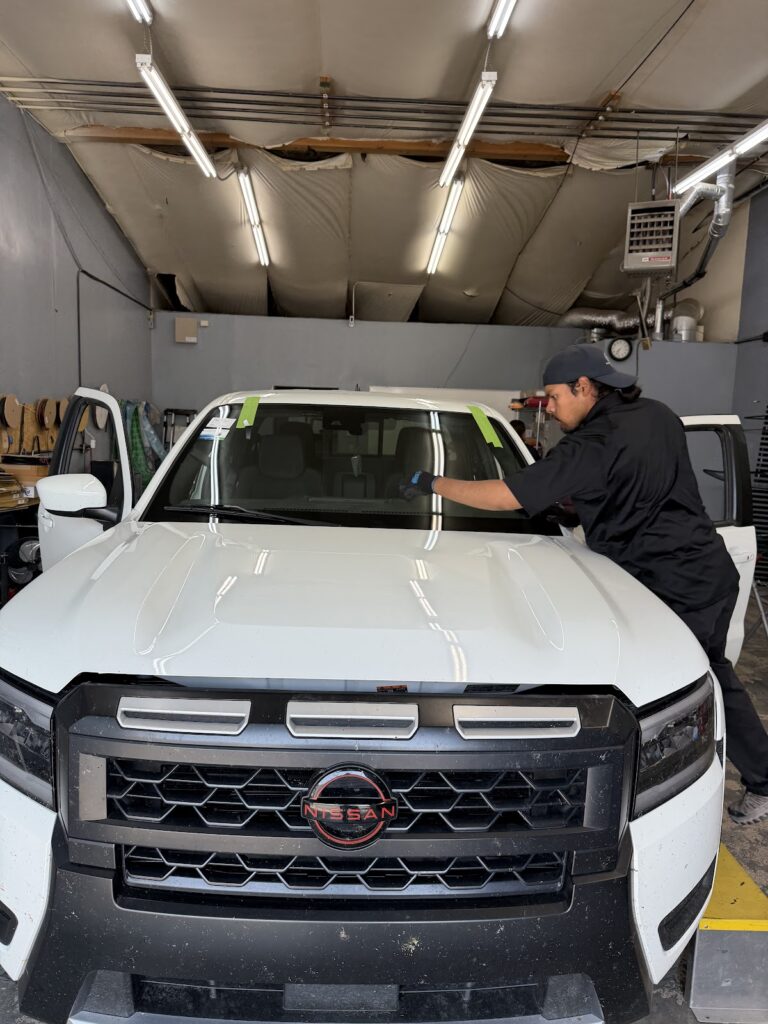
A mobile ADAS calibration appointment prioritizes convenience by bringing professional service directly to your location, fitting into your fleet’s busy schedule. You can expect a thorough, efficient process designed to minimize downtime.
How Long the Service Typically Takes
Mobile ADAS calibration typically takes between 1 to 3 hours, depending on the specific vehicle make, model, the complexity of its ADAS system, and whether static or dynamic calibration is required. Fleet managers appreciate this precise timeframe because it allows for efficient scheduling and minimal disruption to daily operations, getting vehicles back on the road sooner.
Where Mobile Calibration Can Be Performed
Mobile calibration can be performed at your home, workplace, or even a fleet yard, provided there’s a level, obstruction-free outdoor area. For static calibrations, a flat, open space roughly the size of two parking spots is usually sufficient. Dynamic calibrations require access to appropriate local roads for driving tests. This flexibility means no towing fees, no waiting for a shop bay, and no extra day of downtime. We serve the entire state of Utah, and even up into Evanston, Wyoming, and parts of Idaho around the border.
Frequently Asked Questions for Fleet Managers
How quickly can a commercial truck windshield be repaired?
Many commercial truck windshield repairs can be completed in as little as 30-60 minutes, depending on the severity and type of damage. Full semi-truck glass replacement generally takes 2-4 hours, including adequate time for adhesives to cure. Our mobile service further reduces downtime by performing work on-site, bringing the solution directly to your vehicles.
Will a repaired windshield compromise my vehicle's structural integrity?
No, a professionally repaired windshield restores the glass’s integrity and safety. Our repair process uses specialized resins that bond with the existing glass, preventing the damage from spreading and maintaining the windshield’s original strength. Only replacement fully restores the laminated safety glass closer to its OEM specification. When done correctly, repairs are a safe and effective solution for the appropriate types of damage.
Is mobile windshield service available for my fleet?
Yes, mobile windshield service is available for fleets across Utah, extending into Evanston, Wyoming, and parts of Idaho near the border. Our technicians arrive at your location ready to perform repairs or replacements, equipped with the tools and materials necessary for efficient on-site service. This convenience eliminates the need to transport your vehicles, keeping your fleet operational and minimizing disruptions to your schedule.
How do I know if my fleet vehicle's ADAS needs recalibration after a windshield replacement?
If your fleet vehicle is equipped with Advanced Driver-Assistance Systems (ADAS), recalibration is almost always necessary after a windshield replacement. The cameras and sensors that govern features like lane-keeping assist, adaptive cruise control, and automatic emergency braking are often mounted on the windshield, and even slight changes in their positioning can cause them to function improperly. Our technicians will inform you if recalibration is required for your specific vehicle make and model and can perform the service on-site to ensure all safety systems are fully operational.
What is the difference between OEM and aftermarket glass for fleet vehicles?
OEM (Original Equipment Manufacturer) glass is produced by the same manufacturer that supplied the original glass for your vehicle, ensuring a perfect fit and identical specifications. Aftermarket glass is manufactured by other manufacturers and designed to meet or exceed OEM standards. For fleet vehicles, the choice between OEM and high-quality aftermarket glass often comes down to budget and availability. We can discuss both options with you to help you make an informed decision that meets your fleet’s needs and budget while adhering to safety standards.
Final Verdict
Choosing between windshield repair and replacement largely depends on the extent of the damage. For small chips and cracks outside the driver’s critical view, repair is faster, more affordable, and effective. However, significant damage, especially in the driver’s line of sight or compromising ADAS sensors, mandates a full replacement to ensure safety and compliance. When in doubt, always consult with a certified auto glass professional. We are ready to help you make the right choice for your vehicle.
Ready to assess your windshield damage? Get a free auto glass estimate today!
Disclaimer: This content is for informational purposes only.
Written by Two Bros Auto Glass Team | Last updated: July 2026
- How Much Does Auto Window Tint Cost? What You Need to Know - October 21, 2026
- Mobile Auto Glass Service: Frequently Asked Questions - October 20, 2026
- A Fleet Manager’s Windshield Damage Checklist: What to Record Before Booking - October 20, 2026