
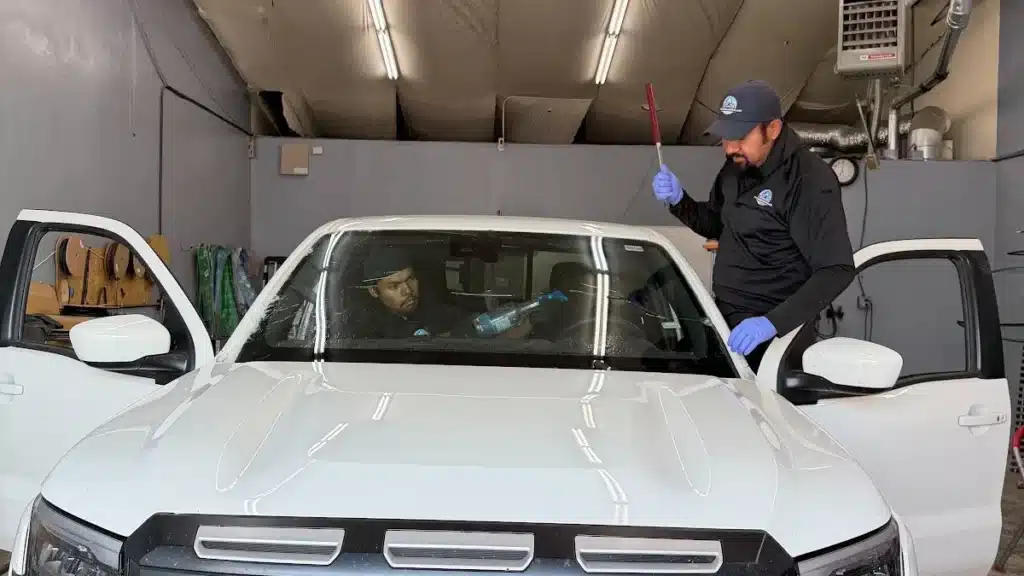
A complete windshield damage report helps your fleet arrange the right service with fewer follow-up calls. Before booking, record the vehicle identification number, damage location, glass features, and available service window. Clear photos help the glass provider assess the request and identify the required parts.
Two Bros Auto Glass provides mobile windshield replacement, semi-truck windshield replacement, and insurance claim assistance for Utah fleets.
Call (801) 268-1204 or request a free estimate to discuss your vehicle’s requirements.
Why Pre-Booking Documentation Matters
A fleet unit number and a close-up photo of a chip rarely provide everything needed to plan service. The glass provider also needs to identify the vehicle, windshield configuration, fitted features, and installation location.
Missing information can lead to additional calls, uncertain parts orders, or appointment changes. A consistent report gives dispatch, maintenance, purchasing, and the technician the same starting information.
Create one record for each damaged vehicle. Keep the photos, service request, approval details, and eventual invoice together rather than spreading them across driver messages.
The purpose is to support professional assessment. Drivers should record what they observe without deciding whether damage is repairable or whether the vehicle meets an inspection requirement.
Record the Vehicle and Glass Details
Vehicles that look alike can use different windshields. Begin with the vehicle’s identity, then document the glass features.
Vehicle Identification
Include:
Fleet unit number.
Full vehicle identification number, or VIN.
Vehicle make, model, and model year.
Vehicle type (e.g., delivery van, box truck, or tractor).
A fleet contact who can confirm the information.
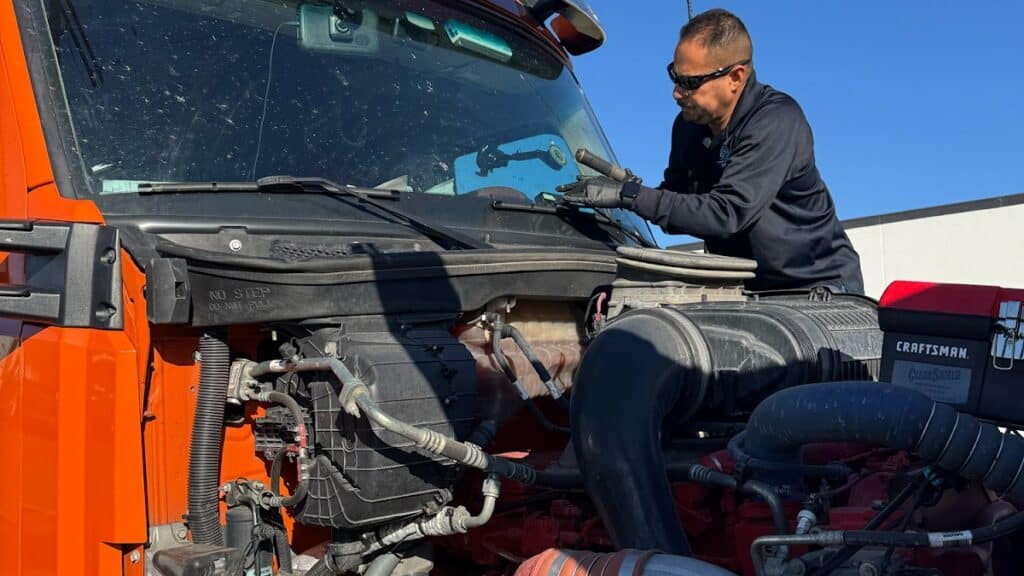
For semi-trucks, identify whether the windshield is one piece or split into separate panels. Describe the affected side from the seated driver’s position to avoid confusion.
Glass Markings
Photograph the permanent marking near the windshield corner, sometimes called the glass bug. Capture the manufacturer name, DOT code, and other legible identifiers.
These markings provide useful identification clues, but they are not a substitute for the VIN and vehicle details. Previously replaced glass may also differ from the vehicle’s original installation.
Do not order replacement glass from a manufacturer name or DOT code alone. Send the complete information to the provider for review.
Windshield Features
Record known features that may affect glass selection:
Windshield-mounted cameras.
Rain sensors or automatic wipers.
Heated glass or visible heating elements.
Head-up display.
Acoustic glass markings.
Antenna elements or other fitted equipment.
Photograph visible features without removing covers, trim, or camera brackets. Note aftermarket dash cameras separately from factory driver-assistance equipment.
If a feature is uncertain, mark it as unconfirmed and include a photo.
Use This Fleet Windshield Damage Checklist
Complete the checklist while the vehicle is safely parked. Keep observations factual and leave repair recommendations to the technician.
Identify the vehicle: Record the unit number, VIN, make, model, and year.
Locate each damaged area: Note whether it is on the driver side, passenger side, center, or near an edge.
Record visible size: Include the approximate chip dimensions and the longest visible crack, with measurement units.
Describe the pattern: Note circular damage, branching cracks, a long crack, or several impact points.
Document visibility concerns: Explain whether damage crosses the driver’s normal view or a camera’s viewing area.
Record when it appeared: Include when the damage was first noticed and whether it has changed.
List previous work: Mention earlier repairs or a recent windshield replacement.
Flag other symptoms: Record leaks, loose trim, wind noise, or dashboard warnings.
Add the service location: Include the parked address, access instructions, and site contact.
Provide vehicle availability: State the proposed maintenance window and next planned departure.
If taking a measurement, hold a ruler nearby without pressing on damaged glass. Do not probe the impact point, disturb trim, or apply household adhesive.
Damage Near the Windshield Edge
Photograph cracks that reach or approach the glass edge. Note visible rust, lifted molding, water intrusion, or nearby trim concerns.
These observations may affect the assessment, but a photograph cannot establish the condition of concealed adhesive, seals, or the mounting area. Do not pull components back to investigate.
Record ADAS Equipment and Warning Messages
Advanced driver assistance systems, or ADAS, may use a windshield-mounted camera for features such as lane warnings and automatic emergency braking.
Record the fitted equipment and any existing warning messages before glass service. This helps the provider review calibration requirements and distinguish a pre-existing concern from something reported afterward.
Include:
A photo of the camera housing.
The exact dashboard warning, if present.
When the warning first appeared.
Recent windshield, collision, or related repair work.
Any driver-reported change in assistance-system behavior.
Windshield replacement may require calibration according to the vehicle manufacturer’s procedure. Some vehicles use static calibration, others use dynamic calibration, and some require both.
The absence of a warning light does not establish that calibration is unnecessary. Ask the provider to check the vehicle-specific requirements when planning the work.
Take Photos That Help the Assessment
Start with context, then capture detail. A tightly cropped chip photo may hide its position relative to the driver, glass edge, or camera.
A useful photo set includes:
The complete windshield from outside.
An interior view showing the damage’s position relative to the steering wheel.
A close-up of each impact point.
The full path of any visible crack.
Glass markings and the VIN label.
Visible camera housings and other relevant features.
Dashboard warnings.
The proposed mobile work area.
Use daylight where practical and adjust the angle if reflections obscure the damage. Take photos only while parked safely.
Label files with the fleet unit number and date. Keep the original images, and update the report if the damage changes before service.
Send VIN, policy, and claim information through your company’s approved communication channel.
Provide the Mobile Service Location and Access Details
A complete booking record explains where the vehicle will be and whether the technician can reach it.
Two Bros Auto Glass offers mobile auto glass repair and replacement across Utah, with additional coverage in Evanston, Wyoming, and Idaho areas near the Utah border. Confirm arrangements for the actual address when booking.
Provide:
Full street address and correct entrance.
Exact vehicle parking or staging position.
Gate codes or security check-in requirements.
Available space around the cab.
Overhead clearance restrictions.
Parking surface and available shelter.
Nearby loading activity or moving equipment.
Property permission requirements.
A reachable on-site contact.
For several vehicles, identify each unit and its availability separately. A shared yard does not mean every vehicle has the same glass or calibration requirements.
The provider will assess whether the location supports the proposed work. Some installations or calibration procedures may require a different setting.
Send the Information for a Repair or Replacement Assessment
Damage size is only one part of the decision. Depth, location, contamination, previous repairs, visibility, and the glass’s condition can also affect suitability.
A technician may consider repair for suitable localized damage. Extensive cracking, edge damage, or significant visibility concerns may require a different service.
Send the complete report rather than requesting the least expensive option automatically. Photos help with initial review, but an in-person inspection may still be needed.
If damage obstructs the driver’s view or raises concerns about safe operation, follow the fleet’s safety escalation process before dispatch. A scheduled appointment does not establish that the vehicle is safe to continue using.
Record the Expected Release Requirements
Ask about appointment timing and when the vehicle can be driven after service. These are separate questions.
For bonded windshield replacement, the applicable adhesive waiting period must be considered. Include required calibration and completion checks in the service plan.
Record the technician’s instructions before committing the vehicle to its next route. Do not use another truck’s previous appointment length as a release standard.
Keep Insurance and Authorization Details Together
If the fleet plans to use insurance, attach the relevant information to the vehicle record.
Include:
Policyholder and insurer details.
Claim number, if assigned.
The person authorized to approve work.
Purchase order or billing requirements.
Any insurer authorization already received.
The contact responsible for additional-work decisions.
Two Bros Auto Glass provides insurance claim assistance. Coverage, deductibles, and payment depend on the policy and insurer’s requirements.
Ask whether required calibration is included in the estimate and how it will be handled under the claim. Do not assume every line item has been approved because a claim number exists.
After service, retain the invoice, applicable calibration documentation, and release instructions with the original damage report.
Frequently Asked Questions
What information should we send first?
Send the VIN, fleet unit number, make, model, year, damage photos, and parked address. Include known glass features, camera equipment, an authorization contact, and the vehicle’s available service window.
Can photos confirm whether a windshield can be repaired?
Photos help with initial assessment, but they may not show damage depth, contamination, or concealed installation concerns. The technician may need an in-person inspection before recommending repair or replacement.
How should we identify damage on a split semi windshield?
Describe the affected side from the seated driver’s position. Include a photo of the entire windshield and close-ups of the damaged panel. Photograph both panels if each has damage.
What site details are needed for mobile service?
Provide the exact address, vehicle position, access instructions, working clearance, available shelter, and site contact. Mention property restrictions or nearby vehicle movement. The provider will confirm whether the location is suitable.
Does windshield replacement include ADAS calibration?
Requirements depend on the vehicle’s equipment and manufacturer procedures. Ask whether the estimate includes the required calibration or lists it separately. Confirm the service arrangements before setting the next departure.
What should drivers do if damage spreads before the appointment?
Update the damage report and photos, notify the fleet’s authorized contact, and tell the glass provider. Follow the fleet’s safety process if visibility or safe operation is in question.
Is after-hours support available for fleets?
Two Bros Auto Glass has an emergency after-hours line for fleets. Ask about the contact procedure through the main number before an urgent need arises. Keep those instructions with dispatch records and approval contacts.
Bottom Line
A useful fleet windshield damage checklist connects the vehicle’s identity, damage, fitted features, and service location in one record. Clear information helps the provider assess the request and helps dispatch plan around the actual work.
Record observations, update changes, and leave technical repair recommendations to the appropriate professional.
Book Your Fleet Auto Glass Service
Two Bros Auto Glass helps fleets arrange windshield replacement, semi-truck windshield replacement, and required ADAS calibration. Our team offers insurance claim assistance and support in English and Spanish.
Have your VIN, damage photos, vehicle location, and available service window ready.
Call (801) 268-1204 or request a free fleet auto glass estimate to get started.
Related Reads

- How Much Does Auto Window Tint Cost? What You Need to Know - October 21, 2026
- Mobile Auto Glass Service: Frequently Asked Questions - October 20, 2026
- A Fleet Manager’s Windshield Damage Checklist: What to Record Before Booking - October 20, 2026