
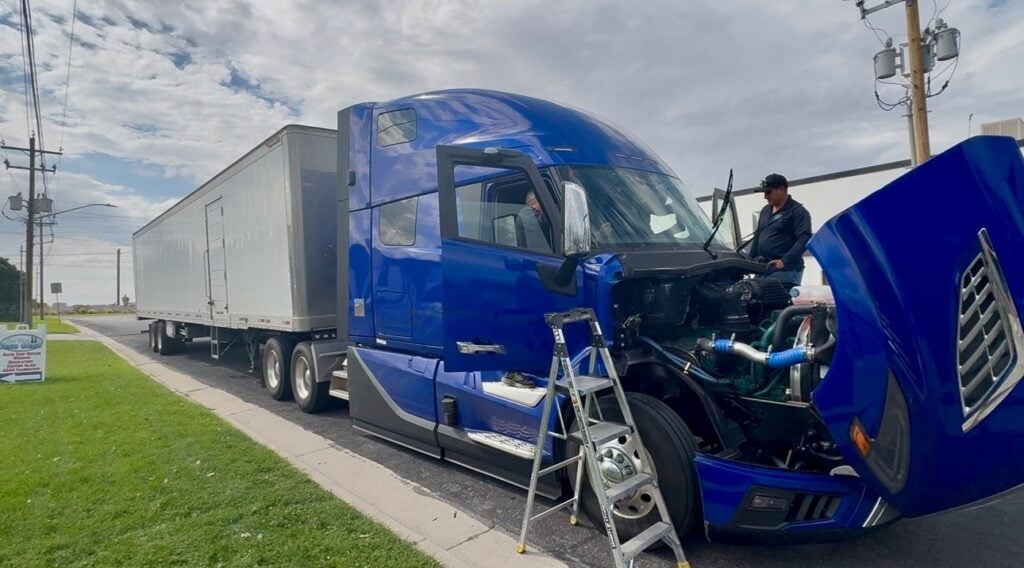
A cracked windshield on a commercial rig can become a visibility and inspection concern as damage spreads.
Two Bros Auto Glass provides mobile windshield replacement, semi windshield replacement, and ADAS calibration across Utah. We also offer insurance claim assistance and emergency after-hours support for fleets. Call (801) 268-1204 to discuss your fleet’s glass needs.
Jump to a section
Build a repeatable fleet glass process
Professional assessment helps determine whether a windshield chip is suitable for repair.
A written reporting process gives drivers and dispatchers the same instructions when glass damage occurs. Without one, a small chip can sit unnoticed in a maintenance queue while the vehicle keeps working. The goal is prompt assessment, not automatic replacement.
We recommend assigning one person to approve glass work and one backup for after-hours decisions. Drivers should know who receives damage photos, who decides whether to hold the vehicle, and who schedules service. Keep those responsibilities separate from the installer’s technical assessment.
Your fleet record should identify more than the vehicle’s license plate. Windshield features can differ within the same model line. A camera bracket, rain sensor, heated area, or acoustic windshield may affect the required replacement glass.
Vehicle details: Unit number, VIN, year, make, and model.
Glass equipment: Camera location, heating elements, sensors, and split or single windshield configuration.
Operating details: Normal parking location, route, dispatch contact, and access instructions.
Approval details: Authorized contact, purchase order requirements, and insurance information.
Store this information where the night dispatcher can find it. A process that only works when the fleet manager is at their desk isn’t ready for commercial operations.
Build Glass Checks into Your Fleet Inspection Process
Checking the primary wiper sweep zone during daily pre-trip routines helps drivers identify visibility concerns and report damage.
Pre-trip glass checks should cover visibility, damage, and related equipment. Ask drivers to inspect from inside and outside the cab. Glare, dirt, and reflections can conceal damage from one viewing angle.
Keep the inspection short enough to use consistently. This checklist gives the driver specific actions and gives maintenance useful information.
Check the driver’s view. Look through the normal seated position for cracks, chips, distortion, and wiper streaks.
Inspect the glass edges. Photograph damage near the frame and any crack extending toward an edge.
Check wipers and washers. Report torn blades, poor clearing, or washer jets that miss the windshield.
Check camera areas. Note damage, dirt, or obstructions near windshield-mounted cameras without moving their brackets.
Record warning messages. Capture the exact dashboard message rather than writing only that a sensor is acting up.
Send a complete report. Include the unit number, location, close-up photo, wider photo, and planned departure.
Request a dispatch decision. Escalate obstructed visibility or uncertain roadworthiness before moving the vehicle.
Drivers shouldn’t decide repairability from a phone photo or a coin-sized comparison alone. Damage depth, location, contamination, and the windshield’s condition all matter. A professional assessment connects those details to the appropriate service.
Choose repair or replacement on condition
Rock chip repair may suit localized damage, while extensive cracking or damage affecting visibility can require windshield replacement. Don’t make that decision on price alone. The assessment should account for the glass condition and the vehicle manufacturer’s requirements.
Windshields generally use laminated safety glass, which bonds glass layers around a plastic interlayer. Damage can affect different layers and locations. Resin repair is intended to treat suitable damage, not rebuild every broken windshield.
Give semi windshields their own assessment
Semi windshield replacement requires attention to cab design, glass configuration, and installation access. Some trucks use split windshields; others use a single large panel. Mounting systems can also differ, including gasket-set and bonded installations.
For split windshields, identify the damaged side and inspect the other pane separately. Replacing one side doesn’t automatically mean replacing both. Frame condition, seals, and any signs of water intrusion also deserve attention before installation proceeds.
Keep repair claims realistic
A repaired chip may remain visible, and appearance alone doesn’t establish whether the work meets its intended purpose. Ask what the technician expects from that specific damage before authorizing repair. Don’t treat a repair kit as the fleet’s default response.
Results for auto glass repair and replacement can vary based on the initial damage severity, vehicle make/model, age of vehicle, and specific ADAS system configurations. That’s why a repair decision should stay attached to the individual vehicle, not a blanket fleet rule.
Our recommendation is straightforward: assess chips promptly and replace glass when the assessment calls for replacement. Waiting for a crack to become impossible to ignore isn’t a maintenance strategy.
Plan mobile service around the actual work
Mobile service can reduce transport arrangements by bringing glass work to a parked vehicle. It still needs suitable access, working conditions, and enough time for the required installation steps. A crowded loading lane isn’t automatically a suitable work area.
We offer mobile auto glass services across the entire state of Utah, and up into Evanston, Wyoming, and Idaho around the Utah border. Fleets operating through Sandy, South Jordan, Lehi, Draper, and West Valley can plan around their actual parking locations.
Before scheduling, share the site surface, overhead clearance, truck orientation, and available space around the cab. Tell us about gates, security procedures, trailers, and equipment blocking access. These details can help reduce avoidable scheduling changes.
At a fleet yard: Identify the unit and keep the work area accessible.
At a delivery stop: Confirm property permission and the vehicle’s available parking window.
At a job site: Describe dust, wind exposure, moving equipment, and ground conditions.
Customer feedback highlights convenient mobile scheduling, servicing multiple vehicles at one location, and coordinated recalibration. Those reported experiences support planning service around parked vehicles, but they don’t promise the same for every appointment.
For fleet scheduling, ask us to assess the location and vehicle requirements before assigning a return-to-service slot.
Separate installation time from dispatch readiness
The end of installation isn’t necessarily permission to drive. Bonded windshields require the adhesive manufacturer’s specified safe drive-away time. Temperature, humidity, installation materials, and vehicle requirements can affect the release instructions.
Keep separate timestamps for arrival, installation completion, calibration completion where required, and authorized release. That distinction helps dispatch avoid booking a load against the wrong milestone. It also makes later downtime reviews more useful.
Our customer feedback includes reports of prompt windshield service and clear scheduling communication. Use that as a service theme, not a standard replacement duration. A commercial truck and a camera-equipped van can require different work.
Utah conditions belong in the schedule. Summer heat along the Wasatch Front, winter weather near Parleys Canyon, and exposed parking around Grantsville can affect site planning. Ask about the work location rather than assuming outdoor service suits every appointment.
Pro tip: Give dispatch a release condition, not just an estimated finishing time. Write that the vehicle remains unavailable until the installer’s driving instructions and any required calibration steps are addressed.
We offer an emergency after-hours line for fleets. Establish the contact procedure during fleet setup, before a driver needs help away from the yard.
Include ADAS calibration in the work order
Windshield replacement on camera-equipped vehicles requires checking the manufacturer’s recalibration instructions. Advanced driver assistance systems, or ADAS, use cameras and other sensors for features such as lane warnings and emergency braking.
The original equipment manufacturer, or OEM, specifies the procedure for the particular vehicle. Don’t assume every truck requires calibration, or that matching the old glass removes the need. Confirm requirements using the vehicle’s identity and equipment.
Static calibration uses a controlled setup
Static calibration takes place with the vehicle stationary and specified targets or equipment positioned around it. The procedure can require controlled lighting, a suitable floor, and precise measurements. A parking space suitable for glass replacement may not meet those conditions.
Dynamic calibration uses a prescribed drive
Dynamic calibration follows a manufacturer-defined driving procedure using suitable diagnostic equipment. Road markings, traffic, and other conditions can affect whether the procedure can be completed. Some vehicles require both static and dynamic calibration.
Recalibration matters because driver assistance features depend on accurate sensor alignment. A windshield that looks right doesn’t prove the camera is correctly aimed. These systems also remain driver assistance, not a replacement for an attentive professional driver.
Ask for the applicable calibration record with the glass invoice. Record unresolved warnings and follow-up instructions before dispatch. That gives maintenance a clearer starting point if a camera-related concern appears later.
Control glass costs with clear records
The useful cost comparison includes the glass work, required calibration, and the operational arrangements around the appointment. Comparing replacement prices without comparing scope can hide meaningful differences. Ask what each estimate includes before approving it.
Separate insurance decisions from repair decisions. We provide insurance claim assistance and work with insurance carriers, but the policy determines authorization and payment. Coverage, limits, and eligibility are determined by the issued policy and applicable state rules.
Keep claim numbers, deductibles, approvals, and calibration documents under the same unit record. Ask who must authorize any additional work before it starts. A clear approval chain can help reduce billing disputes and repeated calls.
Under Two Bros Auto Glass’s Lifetime Rock Chip Discount, windshield replacement customers receive 50% off in-shop rock chip repairs on that windshield for its lifetime. Rock chip repairs are not warrantied. Treat this as an in-shop maintenance option, not free repairs or mobile repair coverage.
Track spending by vehicle and damage event. If one unit repeatedly needs glass work, review its routes, operating environment, and reporting habits. Don’t assume the driver caused the pattern; route exposure may be part of it.
Use the records to compare the full service process. The lowest installation line item isn’t necessarily the strongest operational choice.
Make aftercare part of the maintenance record
Installation instructions should travel with the vehicle, not stay in the fleet manager’s inbox. Give drivers the release instructions and any restrictions on washing, tape removal, or other aftercare. Follow the installer’s directions for that job.
At the next inspection, note new wind noise, water intrusion, visible installation concerns, or camera-related warnings. Report the symptom and when it occurred. Avoid having anyone disturb trim or camera brackets before we assess the issue.
Two Bros Auto Glass’s Workmanship Guarantee requires reporting defects within 10 days. We inspect service-related concerns and correct workmanship issues under those terms. This is distinct from a full product warranty.
Our Calibration Support Warranty applies when calibration passes, but a camera or ADAS-related issue later appears. Our technicians recheck and revise calibration if needed. It isn’t a general promise covering every future ADAS fault.
Record the Lifetime Rock Chip Discount in the unit’s maintenance file too. Eligibility follows the replaced windshield, and qualifying repairs happen in-shop. Keeping that detail visible may support more informed decisions when the next chip appears.
We recommend checking service documents before closing the work order. A complete record includes installation details, calibration information where applicable, aftercare instructions, and any follow-up requirements.
Frequently Asked Questions
Can Two Bros Auto Glass replace semi windshields at our yard?
Yes, Two Bros Auto Glass offers mobile semi windshield replacement, subject to the vehicle’s requirements and suitable site conditions. Share the truck’s VIN, windshield configuration, yard address, and access details when scheduling. Confirm the work area and whether calibration requires a different setup before reserving the vehicle’s maintenance window.
Does every fleet windshield replacement need ADAS calibration?
No, calibration requirements depend on the vehicle’s installed systems and manufacturer procedures. Camera-equipped vehicles need a requirements check before finalizing the work order. Static calibration uses a stationary setup; dynamic calibration uses a prescribed drive. Some vehicles need both, so include calibration planning before dispatch sets a release time.
How should our fleet handle windshield damage after hours?
To handle after-hours windshield damage, have the driver stop safely, report visibility concerns, and send the unit details to dispatch. Two Bros Auto Glass offers emergency after-hours support for fleets. Set up that contact procedure in advance, and keep service availability separate from any decision about whether the vehicle is safe to move.
Will commercial insurance pay for windshield replacement?
Commercial windshield coverage is determined by the fleet’s insurance contract, not by the glass installer. Two Bros Auto Glass provides insurance claim assistance and communicates with carriers. Coverage, limits, and eligibility are determined by the issued policy and applicable state rules. Confirm deductibles and authorization requirements before approving work.
How does Utah weather affect fleet glass maintenance?
Utah weather means fleet glass planning should account for temperature changes, outdoor working conditions, and visibility. Avoid pouring hot water onto frozen glass, and follow the vehicle manual for defrosting. Report existing damage before another route. For mobile service near exposed yards or canyon routes, discuss shelter and conditions during scheduling.
The Bottom Line
Report damage before dispatch and keep the approval process clear.
Choose repair or replacement through a vehicle-specific professional assessment.
Schedule adhesive release requirements and calibration, not just installation.
Keep insurance and warranty records attached to the vehicle.
A useful fleet glass plan turns these steps into a routine your drivers and dispatchers can follow.
Plan your next fleet glass service
We support fleet windshield replacement and semi windshield replacement with mobile service, insurance claim assistance, and ADAS calibration. Our team speaks English and Spanish, and fleet support includes an emergency after-hours contact option.
Call Two Bros Auto Glass at (801) 268-1204 to discuss your vehicles, parking locations, and dispatch requirements. Have the unit details and damage photos ready so we can discuss the appropriate next step.
- How Much Does Auto Window Tint Cost? What You Need to Know - October 21, 2026
- Mobile Auto Glass Service: Frequently Asked Questions - October 20, 2026
- A Fleet Manager’s Windshield Damage Checklist: What to Record Before Booking - October 20, 2026