
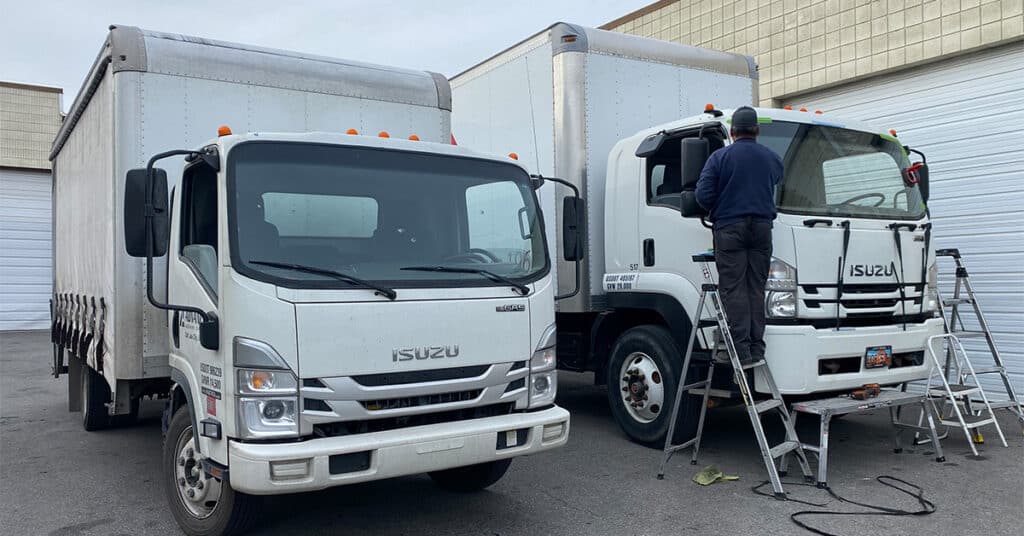
An unplanned windshield replacement can disrupt routes, driver schedules, and vehicle availability. Damaged glass can also raise safety and compliance concerns.
At Two Bros Auto Glass, we offer mobile windshield replacement, semi windshield replacement, and insurance claim assistance across Utah. Call (801) 268-1204 to discuss your fleet’s scheduling needs.
Jump to a section
Streamlining Fleet Windshield Replacement Starts With Dispatch
A complete damage report can reduce avoidable calls, incorrect parts orders, and scheduling changes. Start the process when the driver reports damage, not when the truck reaches its next loading appointment. Assign a fleet contact who can authorize work and coordinate with dispatch.
Drivers should report what they see without deciding whether the windshield meets commercial vehicle requirements. A photograph helps with initial assessment, but it doesn’t replace professional inspection. Keep safety decisions separate from pressure to finish a route.
Build a usable intake record
Your intake record should connect the damaged glass to the exact vehicle and its operating schedule. A truck number alone isn’t enough to identify the correct windshield. Send the following details together:
Fleet unit number, vehicle identification number, make, model, and model year.
Wide and close-up photographs of the windshield damage.
Photographs of camera housings and visible glass markings.
Vehicle location, yard contact, and access instructions.
Next planned departure and any available maintenance window.
Authorization contact, billing instructions, and insurance information when applicable.
For a semi with a split windshield, identify the affected side from the driver’s seated position. Include photographs of both panels. That distinction can prevent confusion among the dispatcher, parts supplier, and technician.
Separate urgency from appointment preference
A truck with obstructed driver visibility needs a different response from a parked spare with minor damage. Route safety concerns through your fleet’s established inspection and escalation process. Don’t treat an open appointment as permission to keep driving.
We maintain an emergency after-hours line for fleets. Arrange that contact process before an incident, including who can approve work outside normal business hours. After-hours access is a communication resource, not a promise of immediate installation or parts availability.
Match the Glass Before Reserving the Truck
Confirm the windshield configuration before taking a vehicle out of service for a planned replacement. Trucks from the same fleet can have different glass features, even when their cabs look alike. Start with the vehicle identification number, supported by equipment details and photographs.
Windshields generally use laminated safety glass, with a plastic layer between the glass layers. Replacement planning also needs to account for heated glass, camera mounting points, and other installed features.
Semi windshield replacement needs its own checklist
Commercial cabs may use split or single-piece windshields, with installation requirements tied to the vehicle design. Access height, glass size, mounting systems, and working clearance all affect preparation. Share cab details rather than describing every unit as a standard semi.
Ask the glass provider to confirm the required part and installation approach before setting a firm dispatch expectation. Original equipment manufacturer, or OEM, procedures should guide vehicle-specific requirements. A parts substitution needs technical review, not just purchasing approval.
For example, a camera-equipped delivery van and an older tractor may need very different release steps. Booking them under the same generic windshield task hides those differences. Record calibration needs alongside the glass order so you don’t discover them after installation.
Once the glass configuration is clear, choose a service setting that supports the entire job, not just removal and installation.
Choose the Service Setting Around the Whole Job
Mobile service can reduce the need to transfer vehicles and drivers to a shop. In-shop work may be more suitable when weather, workspace, or calibration requirements make a yard appointment impractical. Compare the full service sequence before choosing either setting.
We offer mobile auto glass services across Utah, and into Evanston, Wyoming, and Idaho around the Utah border.
For fleets serving Sandy, Lehi, Draper, or Grantsville, the best meeting point isn’t necessarily the vehicle’s current stop. A planned yard visit may offer better access than a busy customer loading area. Confirm the proposed location with the technician before routing the truck there.
Prepare the Yard and Protect the Work Window
A booked truck must be physically available when the technician arrives. Confirm that dispatch won’t send it on another run, that the keys are accessible, and that someone can authorize unexpected findings. A truck listed as parked can still be buried behind trailers.
Reserve a work area away from active loading traffic. Give the technician space around the cab and disclose overhead restrictions or yard access rules. The provider should assess whether the location and conditions are suitable for installation.
Utah heat, cold, wind, and precipitation belong in that conversation. Don’t assume a canopy or open loading bay makes every appointment workable. Adhesive instructions and installation conditions matter more than the original booking preference.
Sequence vehicles without interrupting active work
For multiple replacements, rank units by operational priority and share that order before work begins. Keep a backup vehicle available where your fleet operations allow. Dispatch should understand that a changing route priority doesn’t justify moving a vehicle during a restricted period.
Confirm the selected vehicles are present before the appointment.
Match each parked unit to its approved work order.
Provide keys and a reachable authorization contact.
Keep the work area clear throughout installation.
Wait for the technician’s release instructions before moving a completed unit.
We recommend scheduling around the vehicle’s next genuine idle window, rather than squeezing glass work between uncertain arrivals. That approach gives the provider a usable appointment and gives dispatch a more realistic basis for planning.
Separate Installation, Curing, and Calibration
Finished installation doesn’t automatically mean a vehicle is ready for dispatch. Adhesive curing requirements, required ADAS calibration, and final checks belong in the release plan. Record those stages separately so a progress update doesn’t become accidental permission to drive.
The safe drive-away time is the waiting period specified for the adhesive under the applicable conditions. Ask the technician for the vehicle’s release instructions. Don’t substitute another truck’s previous service time or a customer review for that assessment.
Static and dynamic calibration serve different procedures
Advanced driver assistance systems, or ADAS, can use windshield-mounted cameras for functions such as lane assistance. Replacing the windshield can affect camera positioning. Follow the vehicle manufacturer’s requirements for recalibration because camera alignment matters to safety-related operation.
Static calibration uses targets or fixtures positioned relative to a stationary vehicle. The procedure may require controlled space, lighting, measurements, and vehicle preparation. An apparently open yard isn’t automatically a suitable calibration location.
Dynamic calibration follows a manufacturer-specified driving procedure using diagnostic equipment. Road markings, weather, traffic, and operating conditions can affect whether you can complete the procedure. Some vehicles require both processes.
A drive along I-15 isn’t a substitute for a prescribed calibration procedure. Likewise, the absence of a dashboard warning doesn’t prove the camera is aligned correctly. Have the service provider explain the required process and document its completion status.
Keep the release record explicit
The final handoff should state what was completed, any restrictions, and whether follow-up work remains. Dispatch needs a clear distinction between installation complete and released for operation. If required work remains incomplete, keep the vehicle’s status visible to everyone assigning routes.
Results for auto glass repair and replacement can vary based on the initial damage severity, vehicle make/model, age of vehicle, and specific ADAS system configurations.
Keep Authorization and Insurance Out of the Critical Path
Set approval rules before glass damage interrupts a route. Identify who can approve replacement, who handles insurance questions, and who authorizes additional work if inspection reveals another concern. A technician shouldn’t have to chase an unavailable manager while a truck occupies the work area.
We provide Insurance Claim Assistance and work with insurance carriers on paperwork and communication. Coverage, limits, and eligibility are determined by the issued policy and applicable state rules. Confirm authorization and payment responsibility rather than assuming the claim covers every item.
Compare the complete work scope
A useful estimate identifies the glass, installation work, and required calibration rather than presenting an unexplained total. Ask which items are included and what findings could require further approval. Compare equivalent work scopes when reviewing competing estimates.
Keep billing details tied to the unit number and work order. If a replacement includes calibration, preserve that record with the vehicle’s maintenance documents. This supports later troubleshooting and helps the office reconcile the invoice without interrupting the driver.
Our team speaks English and Spanish. Use that support when discussing damage, arrival instructions, or release restrictions. Clear communication matters most when dispatch, the driver, and the invoice contact are different people.
Before booking a fleet appointment, discuss authorization and insurance needs with us so those decisions don’t wait until the truck is parked.
Use Service Records to Improve the Next Replacement
Measure the whole interruption, not just the technician’s installation time. Record when damage was reported, when the vehicle became available, and when it was released. Those milestones help distinguish parts delays from authorization delays or missed appointments.
Customer feedback on semi windshield replacement highlights the need for flexible scheduling and responsive service. Those are useful service priorities, not dependable turnaround benchmarks. Set expectations based on the actual vehicle, available glass, and required procedures.
Track reasons rather than blame
A short delay note is more useful than a vague entry saying the repair took too long. Record the specific cause: incorrect vehicle details, inaccessible keys, unsuitable workspace, pending authorization, or incomplete calibration conditions. Use that information to revise the next booking.
Review recurring damage by vehicle and route without assuming the road alone caused it. Driver reporting practices, parking conditions, and delayed inspections may also deserve attention. The goal is a better maintenance decision, not a spreadsheet full of unexplained events.
Keep warranty support distinct
Two Bros Auto Glass’s Workmanship Guarantee requires reporting defects within 10 days. It addresses workmanship concerns, not a full product warranty. Report suspected service-related issues promptly and keep the original work order available for review.
Our Calibration Support Warranty applies when calibration passes, but a camera or ADAS-related issue appears later. Our technicians will recheck and revise the calibration if needed. That support isn’t a promise of general ADAS functionality under every driving condition.
Give drivers a clear reporting route for new wind noise, water intrusion, or camera warnings after service. Don’t let a concern disappear between dispatch and maintenance.
Frequently Asked Questions
How should we schedule mobile windshield replacement for a Utah fleet?
To schedule mobile windshield replacement, gather vehicle identification details, damage photographs, the proposed location, and each unit’s departure needs. Share these with Two Bros Auto Glass before committing to a dispatch window. Confirm parts, site suitability, authorization, and calibration requirements together. Keep the selected vehicles available throughout the agreed service period.
Can Two Bros Auto Glass replace semi windshields?
Yes, we provide semi windshield replacement and mobile service for commercial vehicles. Send the truck’s identification details and photographs showing the windshield configuration. For split windshields, identify the affected side from the driver’s seated position. We recommend confirming the glass and access requirements before taking the truck out of its planned schedule.
How long should dispatch allow for a fleet windshield replacement?
Fleet windshield replacement scheduling means accounting for installation, adhesive drive-away requirements, and any required calibration. Ask for a vehicle-specific plan rather than applying another truck’s appointment length. Dispatch should also account for access and authorization. The technician’s release instructions, not the end of glass installation alone, should guide the return to operation.
Can Utah weather change a mobile glass appointment?
Yes, Utah weather can affect whether a mobile installation site meets the required working conditions. Tell us about available shelter and the proposed work area when booking. We review wind, precipitation, and temperature before staging the truck. An alternate location or revised appointment may be appropriate when conditions don’t support the work.
Does fleet windshield replacement include insurance assistance?
Yes, Two Bros Auto Glass offers Insurance Claim Assistance, including paperwork and communication with insurance carriers. Provide the policy and claim details along with your fleet’s approval contact. Coverage, limits, and eligibility are determined by the issued policy and applicable state rules. Confirm any deductible and payment responsibility before authorizing work.
The Bottom Line
Send complete vehicle details before booking replacement work.
Choose a service setting that supports installation and required calibration.
Protect the work window from dispatch changes and blocked access.
Release the truck according to documented instructions, not an assumed completion time.
A useful fleet glass plan starts with the vehicles and approval process you already manage.
Plan Glass Service Around Your Fleet
We offer windshield replacement, semi windshield replacement, ADAS calibration, and Fleet Account Management. Bring your unit details and operating schedule to the conversation so we can discuss a practical service plan.
Call Two Bros Auto Glass at (801) 268-1204 to discuss mobile service and your fleet’s after-hours contact process.

- How Much Does Auto Window Tint Cost? What You Need to Know - October 21, 2026
- Mobile Auto Glass Service: Frequently Asked Questions - October 20, 2026
- A Fleet Manager’s Windshield Damage Checklist: What to Record Before Booking - October 20, 2026