
Quick Answer
Mobile ADAS calibration involves bringing specialized equipment to your vehicle to precisely realign advanced safety sensors after a windshield replacement or impact. The process typically includes a diagnostic scan, either a static or dynamic recalibration, and thorough testing to ensure all systems like lane-keeping assist and adaptive cruise control function correctly. This service preserves your vehicle’s safety features without requiring a shop visit.
Table of Contents
When your commercial fleet vehicles operate daily across Utah’s diverse terrain, safety systems are non-negotiable. A damaged windshield, even if replaced, can compromise these Advanced Driver-Assistance Systems (ADAS), leading to inaccurate sensor readings and potential safety risks. Understanding the mobile ADAS calibration process ensures your fleet remains safe and compliant, keeping your operations running smoothly without unnecessary downtime. Ensuring every vehicle in your fleet, from delivery vans to Class 8 semi-trucks, maintains precise ADAS functionality is critical for driver safety and operational efficiency. Skipping calibration after a windshield replacement can invalidate these safety features, putting your drivers and business at risk. Our mobile service brings the necessary expertise and equipment directly to your location, minimizing downtime and guaranteeing accurate system performance.
Why ADAS Calibration Matters After Windshield Replacement
Missing ADAS calibration after a windshield replacement leaves your fleet vulnerable, compromising critical safety features designed to prevent accidents. These systems rely on precision, which the smallest shift in a windshield can disrupt.
What Is ADAS and How Does It Protect Drivers?
ADAS, or Advanced Driver-Assistance Systems, are intelligent safety features in modern vehicles that help prevent accidents and reduce their severity. These systems use cameras, radar, and ultrasonic sensors to perceive the environment around the vehicle. The protection they offer ranges from warnings about immediate dangers to actively intervening in driving, such as automatic braking. Some common ADAS features include:
Forward collision warning
Lane keeping assist
Adaptive cruise control
Automatic emergency braking
Blind-spot monitoring
Rear cross-traffic alert
Why Windshield Replacement Can Affect ADAS Accuracy
Replacing a windshield, even when done professionally, can subtly shift the position of cameras and sensors mounted to it, altering their field of vision and accuracy. These devices, integral to ADAS functions, are incredibly sensitive to position changes. A millimeter shift in a camera’s angle can translate to several feet of error in its perception at road distances. Proof of this critical alignment: Modern windshields are not just glass; they’re precisely manufactured components, often incorporating brackets for sensors and cameras with tolerances measured in fractions of a degree. Any deviation requires immediate recalibration. According to a study by the American Automobile Association (AAA), 30% of windshield replacements on ADAS-equipped vehicles were not properly calibrated, contributing to potential safety system malfunctions.
The Safety Risks of Skipping ADAS Calibration
Skipping ADAS calibration after a new windshield is installed creates significant safety hazards by rendering your vehicle’s safety features unreliable, or even dangerous. An uncalibrated system might misinterpret road markings, fail to detect obstacles, or incorrectly apply the brakes, leading to potential accidents. This jeopardizes driver safety, increases liability for your fleet, and can lead to costly repairs beyond a simple windshield. Ensure your fleet is calibrated correctly; contact Two Bros Auto Glass for mobile service today.

When Does Your Vehicle Need ADAS Calibration?
Your vehicle requires ADAS calibration whenever sensor alignment is disturbed, which can happen through several common scenarios. Ignoring these triggers can compromise your safety systems.
After Windshield Replacement
ADAS calibration is mandatory after any windshield replacement because the camera’s precise optical path through the glass can change, even slightly. The new windshield’s thickness, curvature, and installation position must match the original specifications. Without recalibration, the camera’s view of the road will be misaligned, impacting safety features that rely on accurate visual data.
Following Collision Repairs or Sensor Replacement
Calibration is essential after collision repairs, especially if the impact affected parts near ADAS sensors or the sensors themselves were replaced. Any structural repair or component exchange can alter sensor positioning, misaligning their field of vision or radar beam. This realignment ensures the entire suite of safety features operates as intended.
When Warning Lights or System Errors Appear
Warning lights or error messages on your dashboard related to ADAS indicate a malfunction that requires immediate calibration and diagnosis. These warnings signal that one or more safety systems aren’t functioning correctly, potentially due to sensor misalignment, component failure, or software issues. Driving with these indicators active compromises your safety features, increasing the risk of an accident. Call us for a diagnostic scan; your safety depends on it.
Pro Tip: Many commercial vehicles operate under strict safety regulations. Post-repair ADAS calibration isn’t just a recommendation; it’s a critical compliance step for fleet managers. Our calibration support warranty means if an issue arises after a passing calibration, our technicians will recheck and revise it.
How Mobile ADAS Calibration Works
Mobile ADAS calibration brings precise, factory-level sensor realignment directly to your location, eliminating the need to take your vehicle to a shop. This process uses specialized equipment to restore your vehicle’s advanced safety systems to best performance.
Step 1: Vehicle Inspection and Diagnostic Scan
The mobile ADAS calibration process begins with a thorough pre-scan and visual inspection of your vehicle and its ADAS components. Our technicians use OEM-specific diagnostic tools to identify any pre-existing fault codes and assess the overall condition of the ADAS sensors and their mountings. This initial step confirms the system’s current status and ensures no underlying issues impede a successful calibration.

Step 2: Determining Whether Static or Dynamic Calibration Is Required
After the initial inspection, our technicians determine the correct calibration method-static, dynamic, or a combination of both-based on your vehicle’s make, model, and specific ADAS system requirements. This determination is crucial because different vehicle manufacturers design their systems to be calibrated under specific conditions. We then prepare the vehicle and the local environment accordingly.
Step 3: Performing the Calibration Process
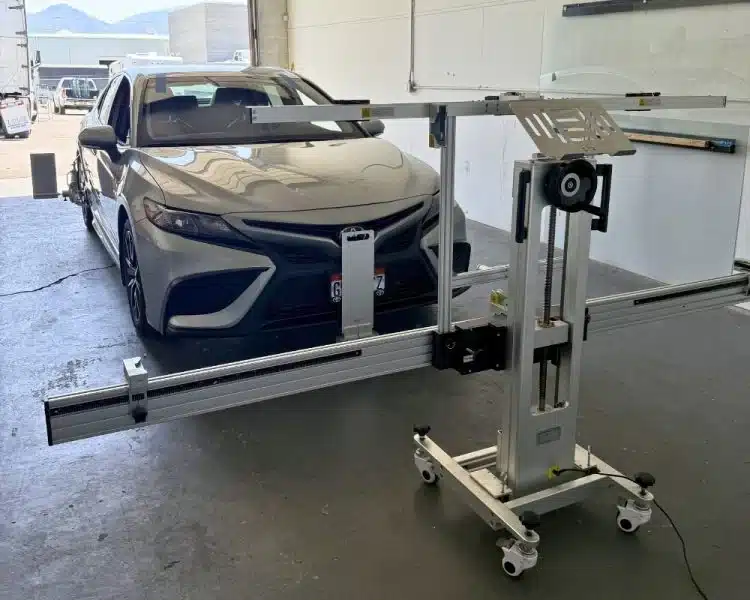
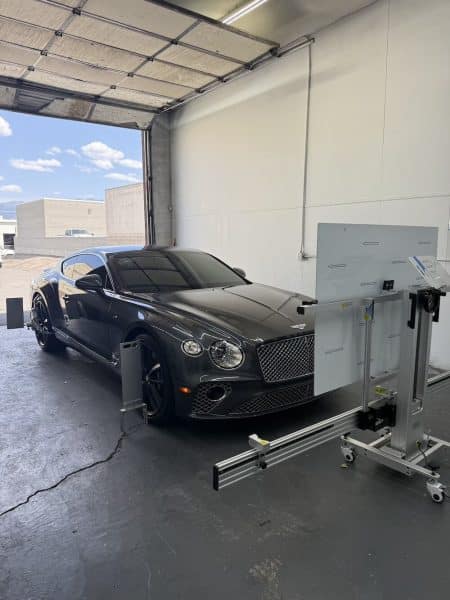
The calibration process involves using specialized equipment to precisely align your vehicle’s ADAS sensors. For static calibration, targets are placed around the parked vehicle at exact distances and angles, allowing cameras and radar to be adjusted. Dynamic calibration involves driving the vehicle under specific conditions. Our technicians follow manufacturer protocols closely to ensure accurate alignment.
Step 4: Testing and Verifying System Accuracy
After calibration, we perform post-scan diagnostics and physical function tests to confirm all ADAS features are operating correctly. This verification step ensures that every sensor accurately detects objects, lane markers, and traffic at the correct distances and angles. We provide a detailed report, offering peace of mind that your vehicle’s safety systems are fully restored.
Disclaimer: This content is for informational purposes only. Consult a qualified professional for specific guidance regarding ADAS calibration.
Static vs. Dynamic ADAS Calibration Explained
Understanding the difference between static and dynamic ADAS calibration is key because manufacturers specify distinct methods to ensure precise sensor alignment. Each method serves a specific purpose in restoring your vehicle’s safety systems.
What Is Static ADAS Calibration?
Static ADAS calibration is performed while the vehicle is stationary in a controlled environment, typically requiring specific targets and alignment equipment placed around it. This method precisely aligns forward-facing cameras and radar sensors by using stationary reference points. The setup must be on a level surface and in an environment free of obstructions, allowing for exact measurements and adjustments.
What Is Dynamic ADAS Calibration?
Dynamic ADAS calibration involves driving the vehicle at specific speeds, on designated road types, and for a set duration. This method allows certain sensors, especially radar and some cameras, to self-learn and recalibrate based on real-world driving conditions. While it requires road testing, our technicians use specialized tools to monitor and guide the process, ensuring all parameters are met for successful recalibration.
Common ADAS Features That Require Calibration
Many modern safety features rely on precisely calibrated sensors to function effectively, protecting drivers from potential hazards. Any disruption to these sensors necessitates recalibration to maintain their accuracy.
Forward Collision Warning Systems
Forward collision warning systems detect imminent frontal crashes and alert the driver, often using radar and forward-facing cameras. These systems rely on accurate distance and speed measurements from calibrated sensors. Even a slight misalignment after a new windshield can compromise their ability to correctly identify threats, potentially leading to delayed warnings or false alarms.
Lane Departure and Lane Keeping Assist
Lane departure warning and lane-keeping assist systems use forward-facing cameras to monitor lane markings and alert drivers if they unintentionally drift out of their lane, or gently steer the vehicle back into its lane. Accurate calibration ensures these cameras correctly interpret painted lines and road geometry. An uncalibrated system might misread lanes or fail to recognize them, rendering the feature ineffective.
Blind Spot Monitoring and Driver Assistance Features
Blind spot monitoring and other driver assistance features, such as rear cross-traffic alert, use radar or ultrasonic sensors typically mounted on the side mirrors or the rear bumper. These sensors rely on precise positioning to detect vehicles in blind spots or when backing up. A collision or even a minor fender repair can misalign these sensors, necessitating recalibration to restore their detection accuracy.
Adaptive Cruise Control Systems
Adaptive cruise control systems automatically adjust vehicle speed to maintain a safe following distance from the car ahead, primarily using front-mounted radar sensors. The precision of these sensors is key for safe operation. If misaligned, the system might misjudge distances, causing inappropriate acceleration or braking.
What to Expect During a Mobile ADAS Calibration Appointment
A mobile ADAS calibration appointment prioritizes convenience by bringing professional service directly to your location, fitting into your fleet’s busy schedule. You can expect a thorough, efficient process designed to minimize downtime.
How Long the Service Typically Takes
Mobile ADAS calibration typically takes between 1 to 3 hours, depending on the specific vehicle make, model, the complexity of its ADAS system, and whether static or dynamic calibration is required. Fleet managers appreciate this precise timeframe because it allows for efficient scheduling and minimal disruption to daily operations, getting vehicles back on the road sooner.
Where Mobile Calibration Can Be Performed
Mobile calibration can be performed at your home, workplace, or even a fleet yard, provided there’s a level, obstruction-free outdoor area. For static calibrations, a flat, open space roughly the size of two parking spots is usually sufficient. Dynamic calibrations require access to appropriate local roads for driving tests. This flexibility means no towing fees, no waiting for a shop bay, and no extra day of downtime. We serve the entire state of Utah, and even up into Evanston, Wyoming, and parts of Idaho around the border.
Weather and Environmental Conditions That May Affect Service
Certain weather and environmental conditions can affect mobile ADAS calibration, mainly for static procedures. Heavy rain, snow, dense fog, or extreme winds can interfere with the precise alignment targets and laser measurements, potentially delaying the service. Direct, intense sunlight can also cause issues. Our technicians assess conditions upon arrival and will communicate any necessary adjustments or rescheduling.
Does Insurance Cover ADAS Calibration?
Most insurance policies cover ADAS calibration when required as part of a covered auto glass repair or replacement. This coverage acknowledges that calibration is a necessary safety procedure rather than an optional add-on.
When Calibration Is Included With Windshield Claims
Calibration is almost always included with windshield claims when your vehicle has an ADAS system and requires replacement. Insurance companies recognize that ADAS functionality is integral to vehicle safety and that proper calibration is essential for the system to operate as intended. Disregarding calibration could lead to liability issues, which insurers want to avoid.
How We Help Handle the Insurance Process
We simplify the insurance claims process for you by working directly with your provider to ensure that ADAS calibration is covered. Our team handles all the paperwork and communications with your insurance company, streamlining what can often be a complex and time-consuming process. This means less stress for you and a faster return to fully functional vehicles. Many commercial fleet managers consistently praise our stress-free insurance claims process.
Understanding Out-of-Pocket Costs
While most ADAS calibration costs are covered by insurance when tied to a windshield replacement, understanding your specific policy’s deductible is vital for anticipating any out-of-pocket expenses. Our team provides clear estimates and will help you navigate your coverage so there are no surprises. Most rock chip repairs are often fully covered by insurance at no out-of-pocket cost, especially with the lifetime rock chip discount for customers who get a full windshield replacement.
Why Utah Drivers Choose Two Bros Auto Glass for Mobile ADAS Calibration
Choosing Two Bros Auto Glass for your ADAS calibration means partnering with a team that prioritizes safety and expert service for every vehicle, including commercial and semi-truck fleets. We offer specialized support that keeps your operations moving.
Statewide Mobile Service Across Utah
We provide thorough mobile auto glass services, including ADAS calibration, throughout Utah, extending to Evanston, Wyoming, and parts of Idaho near the border. This expansive coverage ensures that no matter where your fleet operates, our expert technicians can reach you. This mobile service eliminates the need for your vehicles to travel to a shop, minimizing downtime and maximizing productivity. For emergency support, we even have an after-hours line for fleets.
Certified Calibration Procedures and Advanced Equipment
Our technicians use advanced, factory-spec diagnostic and calibration equipment and adhere to certified procedures for every ADAS system. We ensure precise realignment of all sensors, which is key to the accurate functioning of features like forward collision warning and lane-keeping assist. This commitment to advanced technology and exact processes guarantees your commercial vehicles meet safety standards and perform optimally. We consistently prove that mobile doesn’t mean lower quality.
English and Spanish Support
We offer dedicated customer support and service in both English and Spanish, ensuring clear communication and a comfortable experience for all our clients. Our bilingual staff effectively answers questions, explains procedures, and manages the entire service process in your preferred language. This commitment to accessible communication helps us better serve Utah’s diverse community and expansive commercial operations.
Workmanship Guarantee and Calibration Support Warranty
All services performed by Two Bros Auto Glass come with a solid workmanship guarantee, and our ADAS calibrations are backed by a dedicated calibration support warranty. The workmanship guarantee means that if an issue arises with our service, we will inspect and correct it promptly if it is reported within 10 days. Furthermore, our Calibration Support Warranty promises that if a calibration passes but you later experience a camera or ADAS-related issue, our technicians will recheck and revise the calibration as needed. This protects your investment and ensures lasting safety.
Frequently Asked Questions
How often should ADAS be calibrated?
ADAS should be calibrated any time a vehicle’s sensors are disturbed, such as after a windshield replacement, collision repair, suspension work, or if warning lights appear on the dashboard. It is not a regularly scheduled maintenance item but rather an as-needed service.
Can I drive my vehicle immediately after mobile ADAS calibration?
Yes, in most cases, you can drive your vehicle immediately after a mobile ADAS calibration. Our technicians perform post-calibration tests to verify that all systems are functioning correctly before returning the vehicle to you.
What happens if I don't calibrate my ADAS after a windshield replacement?
Skipping ADAS calibration after a windshield replacement can lead to impaired safety features, false warnings, or systems that fail to activate when needed. This can compromise your vehicle’s safety, increase the risk of accidents, and potentially lead to liability issues if your vehicle is part of a commercial fleet.
Is ADAS Calibration Required After Every Windshield Replacement?
Yes. If your vehicle is equipped with Advanced Driver-Assistance Systems (ADAS), calibration is mandatory after a windshield replacement. The cameras and sensors are mounted directly to the glass or positioned behind it; even a microscopic shift in the new glass’s angle can cause the safety systems to misread the road, leading to dangerous errors in automatic braking or lane-keep assist.
Can Mobile ADAS Calibration Be Performed on Fleet Vehicles and Semi-Trucks?
Absolutely. Specialized mobile units, like those used by Two Bros Auto Glass, are equipped with the heavy-duty diagnostic tools and targets necessary to calibrate Class 8 semi-trucks, delivery vans, and commercial fleet vehicles on-site. This significantly reduces downtime by eliminating the need to transport large vehicles to a specialized ADAS calibration shop.
Ensure Your Vehicle's Safety: Schedule Mobile ADAS Calibration Today
Maintaining the integrity of your fleet’s safety systems shouldn’t be a logistical headache. By choosing Utah fleet auto glass specialists for your ADAS calibration services, you ensure that every vehicle- from standard passenger cars to heavy-duty commercial trucks- is returned to OEM safety standards immediately after glass repair. At Two Bros Auto Glass, we understand that for Utah businesses, time is money and safety is paramount. Our expert technicians bring the car ADAS calibration center directly to your yard or job site, providing the precision of a shop with the convenience of mobile service.
Don’t compromise on driver safety; schedule your mobile recalibration today and keep your operations running smoothly with total peace of mind.

- Understanding Your Auto Glass Warranty: What’s Covered? - July 24, 2026
- Windshield Replacement Cost in Utah: Your Comprehensive Guide - July 24, 2026
- Windshield Repair vs. Replacement: Making the Right Choice for Your Vehicle - July 20, 2026