
|
Need auto glass repair? Get Your Free Estimate → |
Understanding auto window tinting involves more than just choosing a shade; it requires knowing the terminology behind the films, their performance, legal aspects, and installation processes.
At Two Bros Auto Glass, we believe an informed customer makes the best decisions for their vehicle and safety.

VLT (Visible Light Transmission) measures the percentage of light tint allows through, directly impacting visibility and privacy.
Ceramic tint offers superior heat rejection and UV protection without interfering with electronic signals.
Legal tint percentages vary significantly by state and govern how dark your front and rear windows can be.
Professional installation prevents common issues like bubbling, peeling, and film distortion, ensuring longevity.
Benefits of tinting extend beyond aesthetics, including improved UV protection, glare reduction, and interior preservation.
Navigating the world of auto window tinting requires a grasp of specific terms. These definitions cover everything from film materials to legal limits, helping you choose the right tint for your vehicle in Utah and beyond.
Get a clearer understanding of your tint options and call us today for a personalized consultation. Hablamos español.
Various film types offer different benefits, ranging from basic privacy to advanced heat rejection and compatibility with electronic signals. Each type uses distinct materials and manufacturing processes to achieve its specific properties.
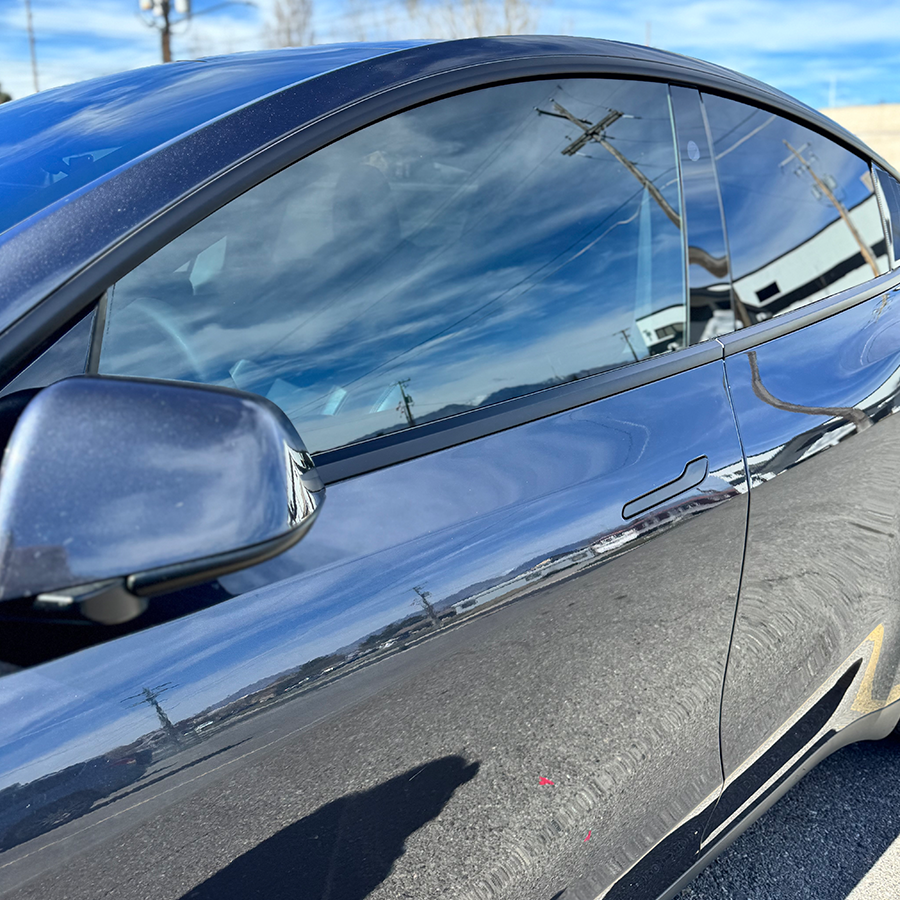
Understanding how tint is measured helps you make informed decisions about privacy, safety, and compliance with local regulations. These terms quantify the performance of window films.
VLT (Visible Light Transmission): The percentage of visible light allowed to pass through the window film. A lower VLT means a darker tint. For example, 5% VLT is very dark, often called “limo tint.”
UV Rejection: The percentage of harmful ultraviolet (UV) rays blocked by the film, protecting your skin and interior from sun damage. Most quality tints block 99% of UV rays.
TSER (Total Solar Energy Rejected): The overall percentage of solar energy (heat, light, UV) rejected by the film. A higher TSER indicates better heat reduction inside the vehicle.
Glare Reduction: The film’s ability to reduce harsh sunlight and headlight glare, improving driving comfort and safety.
Scratch-Resistant Coating: A protective layer applied to the tint film that helps prevent everyday scratches and abrasions, extending the film’s lifespan.
Our professional installation ensures these performance metrics are met. Customers consistently praise our attention to detail, as noted by Donald Gammon: “Service was quick and efficient, the price was as quoted and very easy to work with. A pleasure to work with.”
Schedule your ADAS calibration immediately after any auto glass service.
Proper application is critical for the longevity and aesthetic appeal of your chosen window tint. These terms describe the tools, techniques, and potential issues related to the tinting process.
Adhesive: The layer on the film that bonds it to the glass; quality adhesives prevent bubbling and peeling.
Curing Time: The period, typically a few days to a few weeks, during which the tint’s adhesive fully dries and bonds to the glass. During this time, windows should not be rolled down.
Squeegee: A tool used to smooth the film onto the glass and remove water and air bubbles during installation.
Heat Gun: Used by installers to shrink the film for a custom fit on curved windows, preventing wrinkles and creases.
Bubbling/Peeling: Common issues that can arise from improper installation or low-quality film. Bubbles indicate trapped air or moisture, while peeling suggests adhesive failure.
Our workmanship guarantee covers all services, ensuring any issues related to our service are corrected promptly if reported within 10 days. Call us to schedule your professional tinting installation.
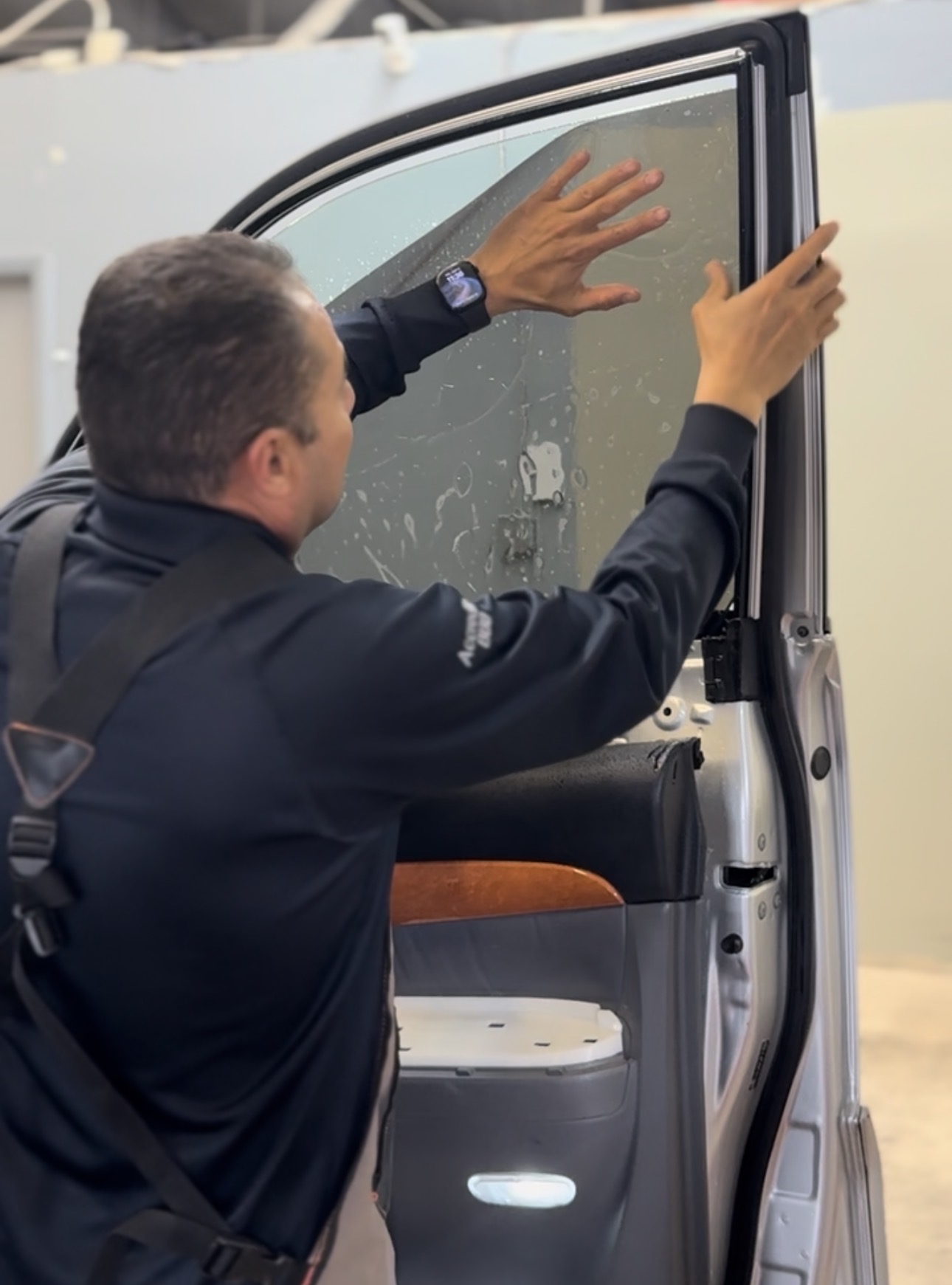
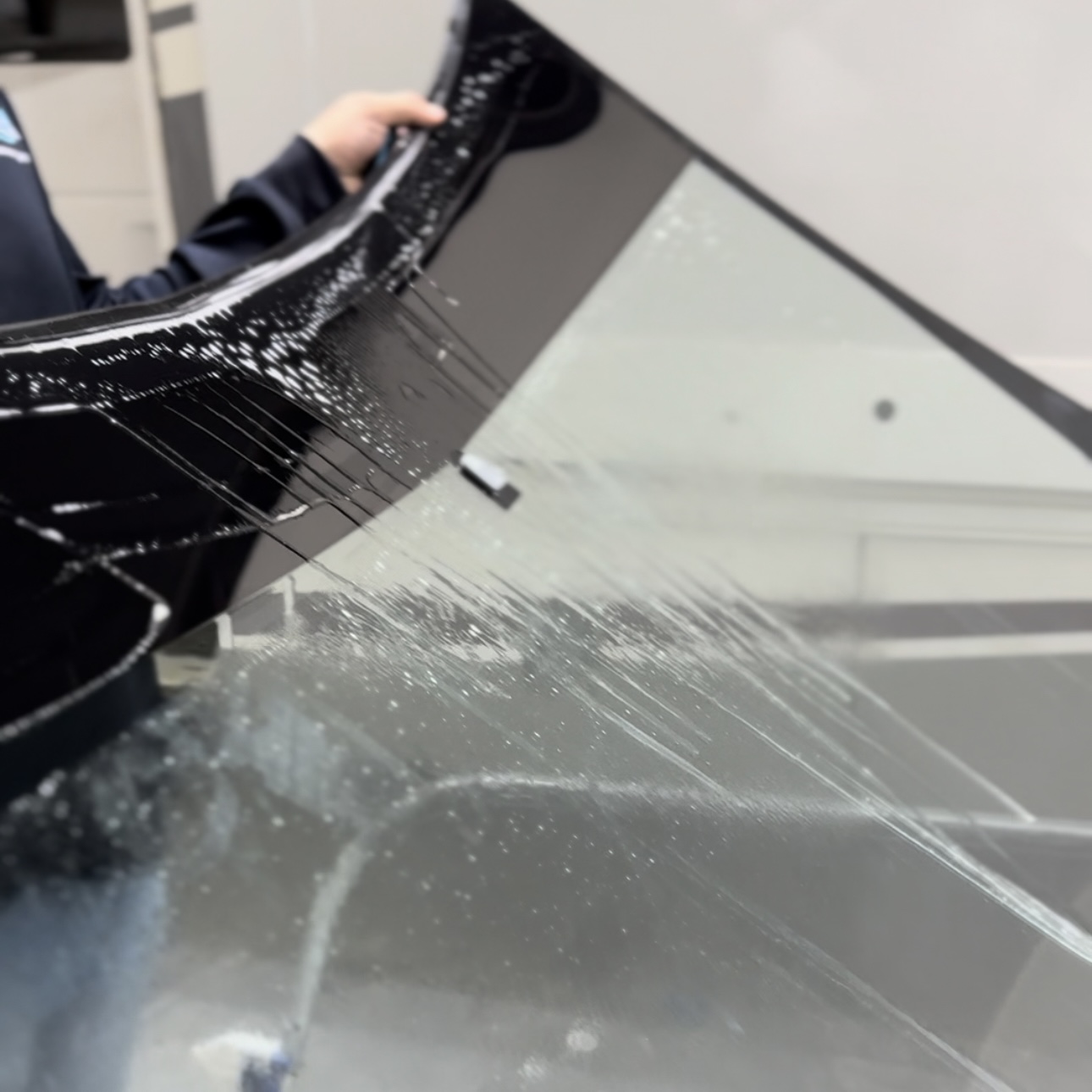
Beyond aesthetics, window tinting offers several practical advantages for your vehicle and its occupants. Proper care ensures these benefits last.
UV Protection: The film’s ability to block harmful ultraviolet radiation, protecting skin from aging and reducing the risk of skin cancer, a key benefit of our professional car window tinting in Utah.
Heat Rejection: The percentage of solar heat prevented from entering the vehicle, keeping the interior cooler and reducing reliance on air conditioning.
Interior Fading: The process by which sunlight causes vehicle upholstery, dashboards, and carpets to fade over time; tint helps to slow this down significantly.
Privacy: The film’s opacity provides occupants with discretion and discourages theft of valuables inside the vehicle.
Aftercare: Recommended cleaning methods and products for tinted windows to avoid damage to the film, such as ammonia-free cleaners and soft cloths.
Our Black Pearl HP Shades not only improve privacy but also protect your interior. Customers like Troy Kunz appreciate our reliable service, stating, “Two Brothers did a great job replacing my windshield. Definitely recommend.”
Understanding these terms empowers you to make informed decisions about your auto window tinting. This knowledge ensures you select a tint that not only looks great but also provides the benefits you expect while remaining compliant with local regulations.
Choosing the right tint involves balancing aesthetics and legality, a process that can be complex without expert guidance. Our team offers bilingual service, speaking English and Spanish, to explain every detail and ensure you receive the best solution for your vehicle.
A downed vehicle can be costly, and a misunderstanding of tint laws or performance might lead to unnecessary re-tinting or fines. By understanding terms, you avoid common pitfalls and ensure a stress-free outcome. Let us simplify the process for you; contact us to discuss your tinting needs and ensure hassle-free insurance claims.
Disclaimer: This content is for informational purposes only. Consult a qualified professional for specific guidance regarding auto window tinting laws and product suitability.
The cost of auto window tinting typically ranges from $150 to $500, depending on the type of film, vehicle model, and the number of windows. Premium ceramic films, for example, cost more than basic dyed films due to their superior heat rejection and durability.
Film Type: Dyed films are generally the least expensive, while ceramic films are the most.
Vehicle Size: Larger vehicles with more windows, like SUVs or vans, usually cost more to tint.
Number of Windows: Tinting all windows will be more expensive than just the side windows.
Installer Expertise: Experienced and certified installers may charge more, but they offer higher quality and a better warranty.
We offer competitive pricing and even price-match competitors, so you get the best value without compromising quality. Request your quote today.
Yes, auto window tinting is a worthwhile investment due to its numerous benefits beyond just aesthetics. It protects your vehicle’s interior, improves safety, and improves driving comfort, leading to long-term savings and increased resale value.
UV Protection: Blocks up to 99% of harmful UV rays, protecting occupants from skin damage and preventing interior fading.
Heat Reduction: Reduces interior temperature, making your vehicle more comfortable and potentially improving fuel efficiency by lessening AC use.
Improved Privacy & Security: Deters theft by making it harder to see inside your vehicle and providing personal privacy.
Glare Reduction: Cuts down on blinding glare from the sun and headlights, improving visibility and reducing eye strain while driving in Utah’s bright sunlight.
Shatter Protection: In an accident, tint film can hold shattered glass together, increasing safety.
Many of our customers, like Heather Fuhr, have a “Great experience!” with our services. Consider window tinting for improved safety and structural integrity. Call us for a free estimate.
Auto window tinting laws vary significantly by state, specifically concerning VLT percentages for different windows. It’s key to know your local regulations to avoid fines and potential issues during vehicle inspections.
For example, in Florida:
Front Side Windows: Must allow more than 28% of light in.
Back Side Windows: Must allow more than 15% of light in.
Rear Window: Must allow more than 15% of light in.
And in California:
Front Side Windows: Must allow more than 70% of light in.
Back Side Windows: Can be tinted to any darkness.
Rear Window: Can be tinted to any darkness.
These contrasts highlight the need for professional guidance when tinting your vehicle, especially when considering moving between states or traveling through different regions. Our mobile auto glass service extends across all of Utah, and even into Evanston, Wyoming, and parts of Idaho near the border, so we’re familiar with various state requirements. We ensure your tinting complies with Utah regulations for vehicles operating on busy highways like I-15 and on local roads in Salt Lake County.
Talk to our experts about understanding tint laws specific to your area. We provide bilingual service to clarify all legal requirements.